
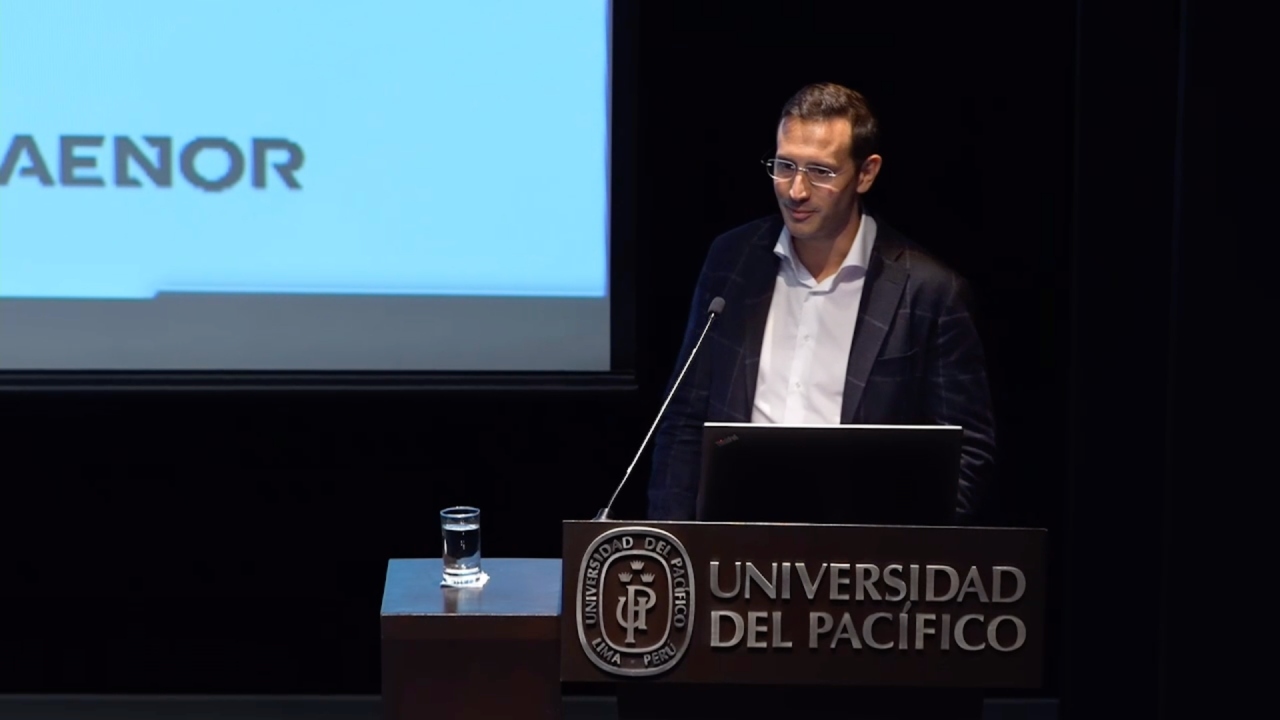
In an era where technological advancements accelerate at an unprecedented pace, businesses are grappling with the challenges of staying relevant and competitive. Alan Zettelmann, author of Commanding Innovation, recently shared his insights on leveraging the ISO 56000 standard to navigate the complexities of innovation management. Drawing from his eight-year journey across various industries, Zettelmann offers a vivid portrayal of the hurdles and opportunities that organizations face in today’s dynamic environment.
On this page
- The New Normal: Embracing Uncertainty
- The Imperative of Innovation
- Overcoming the Fear of Innovation
- The ISO 56000 Standard: A Framework for Innovation
- The Acceleration of Technological Cycles
- Leveraging Data and AI
- Building the Right Teams and Culture
- Managing Complexity Through Frameworks
- The Urgency of Action
The New Normal: Embracing Uncertainty
The global landscape has dramatically shifted, especially in the wake of the COVID-19 pandemic. Pre-pandemic strategies centered around continuous improvement and linear ideation are no longer sufficient. Companies now operate in a “new normal,” characterized by rapid changes and unforeseen challenges. Zettelmann emphasizes that many organizations were ill-prepared to adapt quickly, lacking the necessary innovation pipelines to respond effectively.
Key Takeaway: Businesses must build agility into their core operations, enabling them to pivot swiftly in response to global events and technological disruptions.
The Imperative of Innovation
Statistics paint a stark picture: since the year 2000, over 50% of companies listed in the S&P 500 have disappeared due to creative destruction. Predictions suggest that in the next decade, 40% of today’s companies may no longer exist in their current form. The life expectancy of businesses has plummeted from several decades to just over 12 years.
Zettelman highlights the pressure felt by executives at all levels. The inability to predict market shifts as accurately as before induces significant stress. Despite recognizing innovation as vital, only 6% of companies are satisfied with their innovation efforts, and a mere 10% of executives have strategies aligned with their capabilities.
Key Takeaway: There’s a pressing need for organizations to not only prioritize innovation but also to align their strategies with their actual capabilities.
Overcoming the Fear of Innovation
Resistance to innovation often stems from fear—fear of failure, job loss, or stepping out of comfort zones. Zettelmann uses vivid analogies to illustrate this point, such as employees bringing golden opportunities (a goose with golden eggs) only to face skepticism and rejection.
Key Takeaway: Cultivating a culture that says “yes” to innovation requires leadership that is willing to embrace risk and encourage out-of-the-box thinking.
The ISO 56000 Standard: A Framework for Innovation
The ISO 56000 series provides guidelines for innovation management, offering organizations a structured approach to embedding innovation into their DNA. Zettelmann stresses that innovation should not be siloed within R&D departments but should permeate every facet of an organization.
Key Components of ISO 56000:
- Strategic Alignment: Ensuring that innovation efforts are in sync with the organization’s overall strategy.
- Resource Allocation: Committing appropriate resources—time, budget, and personnel—to innovation initiatives.
- Portfolio Management: Balancing a mix of incremental and radical innovation projects to manage risk and return effectively.
Key Takeaway: Implementing a standardized framework like ISO 56000 can help organizations systematically manage innovation and foster a culture that supports it.
The Acceleration of Technological Cycles
Technological innovation cycles are shortening. While earlier industrial revolutions spanned decades, recent cycles occur over mere years. Innovations like the Internet of Things (IoT), artificial intelligence (AI), and blockchain are converging, creating exponential growth and opportunities.
Zettelmann points out that humans often struggle to perceive this acceleration, leading to underestimation of future changes and over-reliance on past experiences.
Key Takeaway: Organizations must develop foresight and adaptability, recognizing that future advancements may arrive sooner and impact more significantly than anticipated.
Leveraging Data and AI
Data is the new oil, and its real-time analysis is crucial for decision-making. Zettelmann notes that vast amounts of data lose value quickly if not utilized promptly. Automation and AI are essential tools for processing and acting on data efficiently.
He also warns of the potential pitfalls of AI, emphasizing the need for accuracy and ownership of data. Relying solely on public AI models can pose risks, especially concerning data privacy and security.
Key Takeaway: Investing in proprietary AI systems and data management processes can provide a competitive edge while safeguarding sensitive information.
Building the Right Teams and Culture
Successful innovation hinges on people. Organizations need to identify and empower individuals who champion innovation—those who think differently and drive change. Zettelmann mentions the importance of assembling teams with diverse perspectives to enhance problem-solving and creativity.
He also introduces the concept of “Innovation IQ,” a metric for assessing an organization’s innovation capabilities compared to industry peers.
Key Takeaway: Fostering a culture that values diversity, continuous learning, and empowerment is critical for sustained innovation.
Managing Complexity Through Frameworks
As complexity increases, traditional management approaches falter. Zettelmann advocates for adopting frameworks and processes that can handle multifaceted variables without overwhelming decision-makers.
Key Components:
- Governance Model: Clear structures for decision-making and accountability.
- Innovation Processes: Defined stages from ideation to implementation.
- Support Systems: Tools and technologies that facilitate innovation activities.
Key Takeaway: Structured frameworks enable organizations to navigate complexity effectively, ensuring that innovation efforts are strategic and coordinated.
The Urgency of Action
Zettelmann concludes with a call to action, stressing that the cost of inaction is higher than the investment required for innovation. He underscores the importance of consistency and persistence, likening it to compound interest—the benefits accrue significantly over time with sustained effort.
Final Thought: Organizations must act now to embed innovation into their core strategies, processes, and cultures. The future belongs to those who are prepared to adapt and lead in the face of rapid change.
About the Author: Alan Zettelmann is a seasoned innovation expert and author of Commanding Innovation. With a rich background in guiding companies through the complexities of innovation management, his insights offer valuable guidance for organizations aiming to stay ahead of the curve.
Watch the full Video Link: https://www.youtube.com/watch?v=QWuyfWIFYMw
Frequently asked questions
Why is uncertainty now the normal operating condition?
Because disruption has become structural rather than exceptional. More than half the companies listed in the S&P 500 in 2000 have since disappeared through creative destruction.
What stops organisations from innovating?
Fear — of failure, of job loss, of leaving a comfortable position. Overcoming it requires leadership willing to accept risk and to sponsor ideas before they are proven.
How do frameworks help manage innovation complexity?
They convert scattered decisions into a coordinated system, so innovation effort is strategic rather than opportunistic. The ISO 56000 family provides the international reference.